
Problem
A researcher at a mid-sized company is often supporting three or four product teams at once. Each has its own roadmap and its own sense of urgency. The researcher wants to run studies. The teams want answers faster than research can produce them.
Running a study from first interview to final insight means scheduling 8 to 12 participants, conducting each interview, cleaning the transcripts, synthesising themes, and extracting something the team can act on. The analysis phase alone can take weeks. Skate AI makes user research easier to incorporate into the design process by cutting the time from question to action.
I built Skate AI as a side project, partly to solve a problem I'd seen on product teams, partly to understand how AI systems actually work in practice.
Workflow
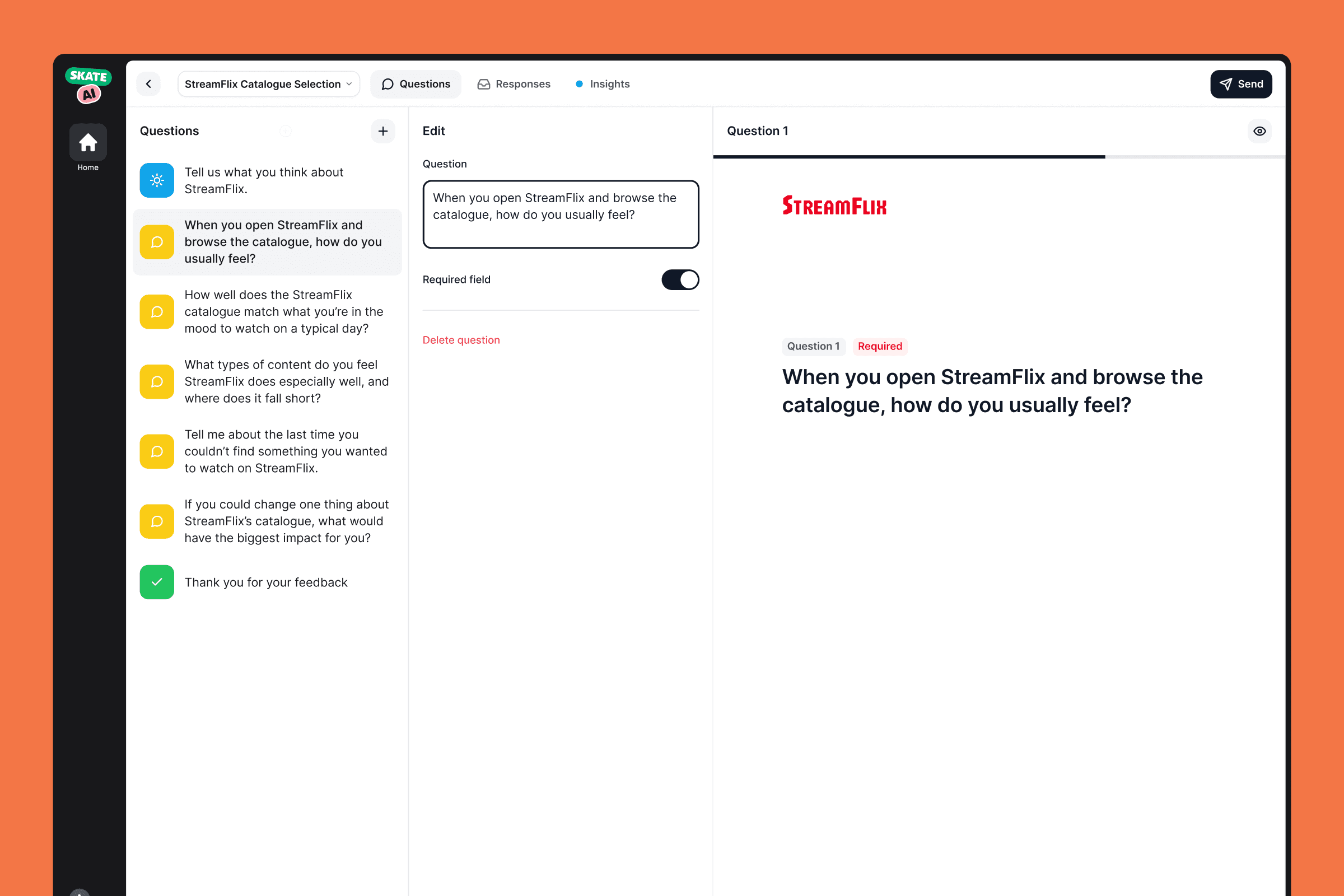
Research study creation
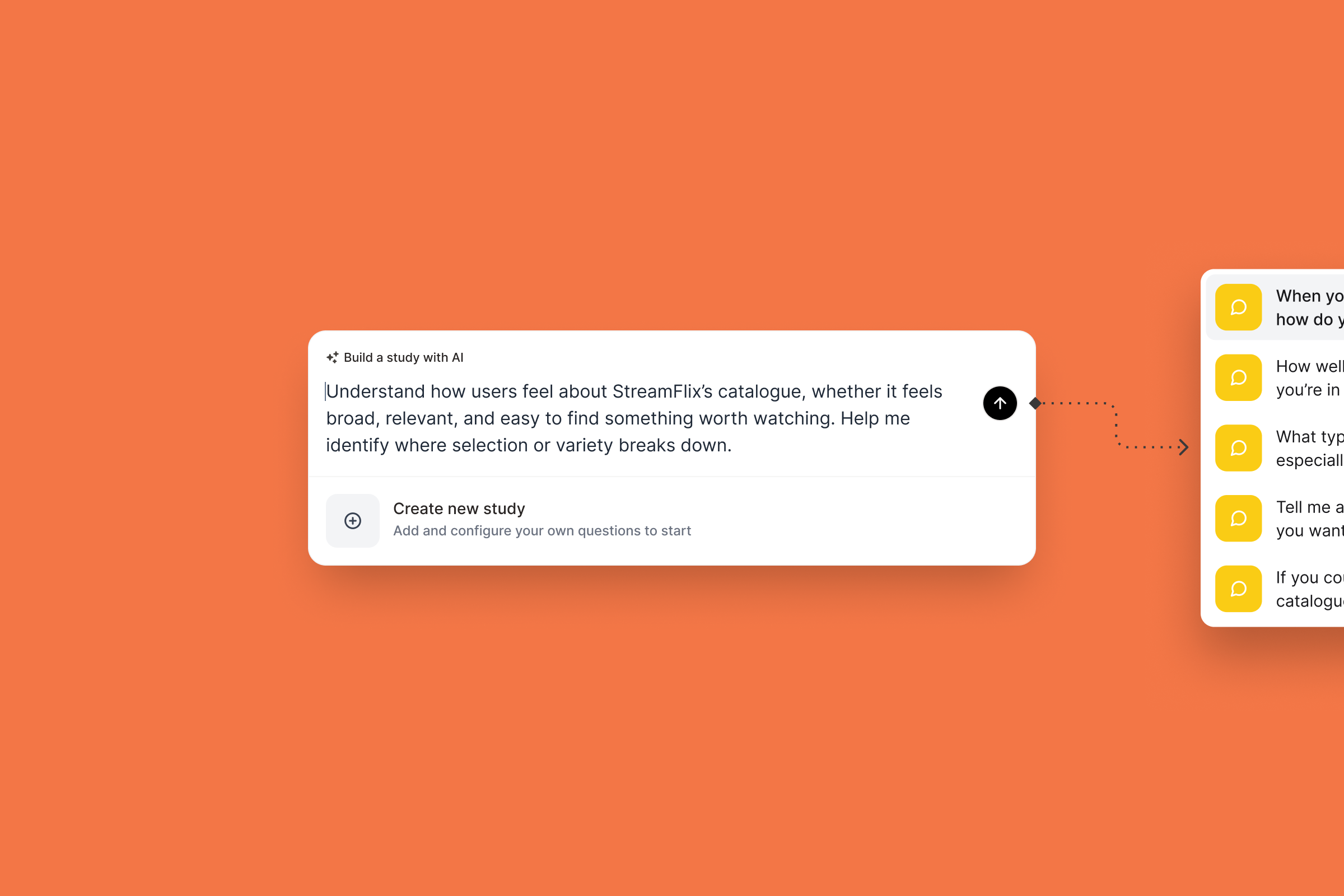
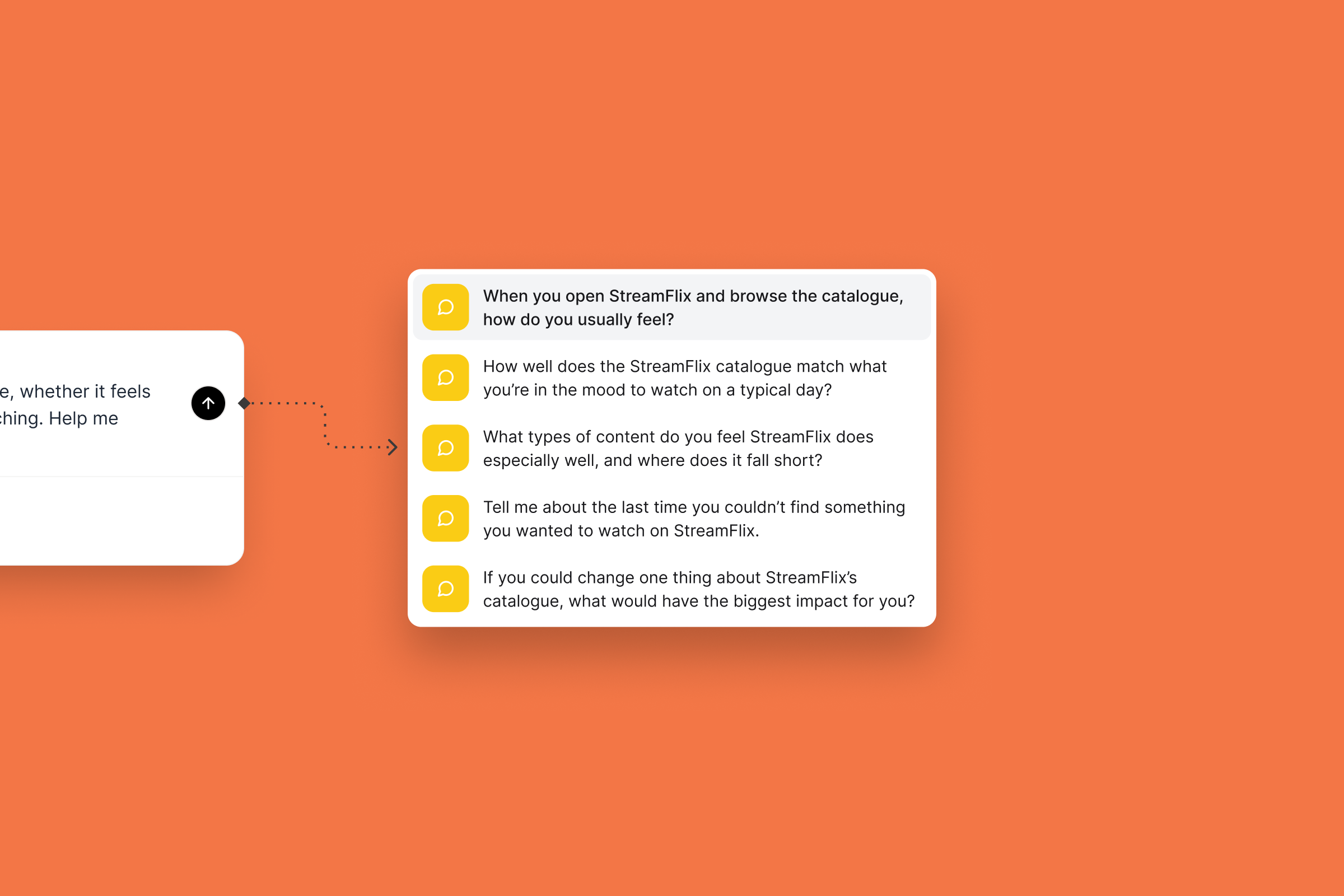
A researcher starts by describing what they want to learn. The prompt might be something like: Why do users leave without watching anything? Skate AI turns that into a set of interview questions and generates a shareable study.
AI Moderated Interviews
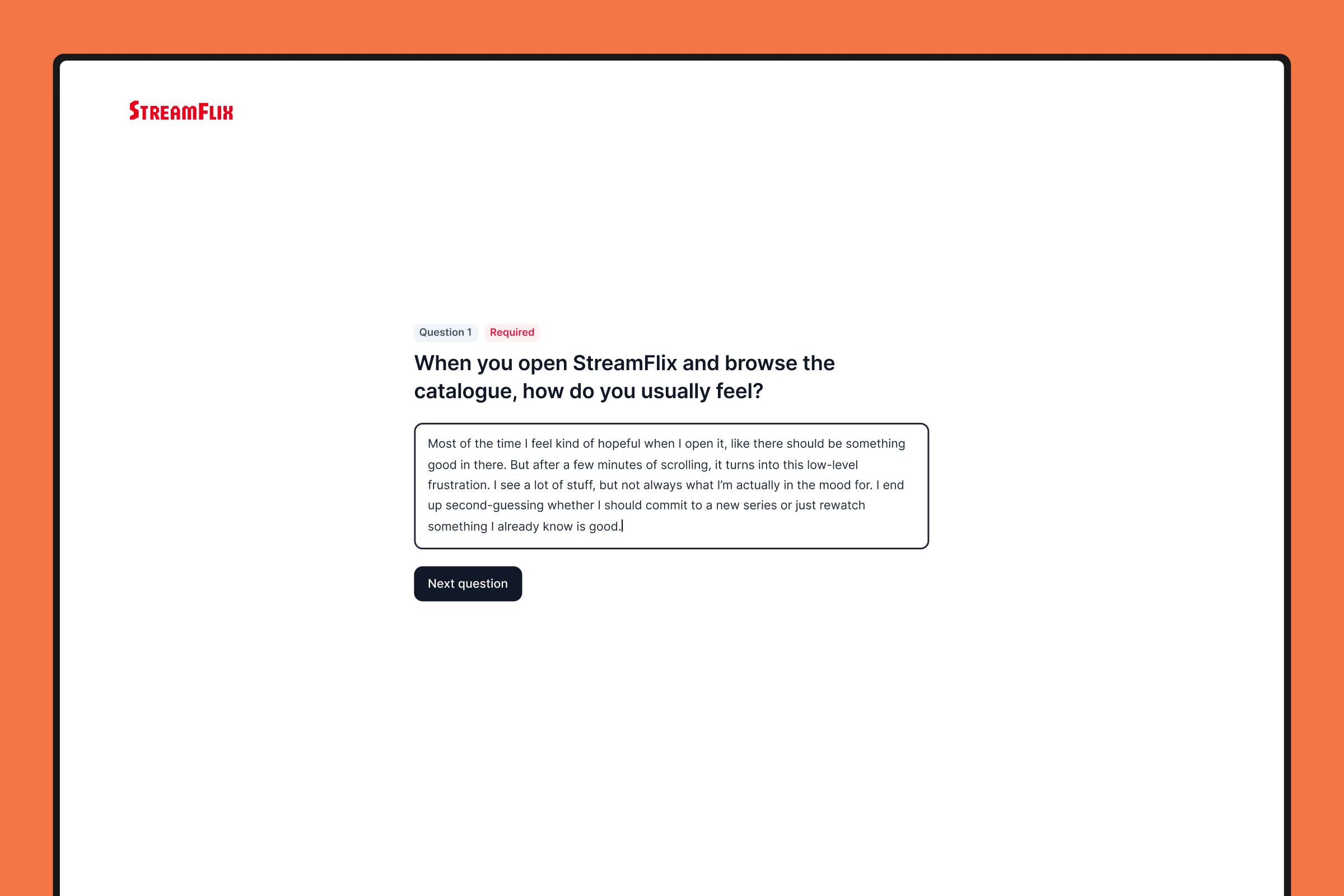
From there, the study link goes to participants. Skate AI conducts each interview question by question. When a participant says something worth following up, it asks one probing question. The interview is designed to feel like a conversation, not a form.
Automated AI Analysis
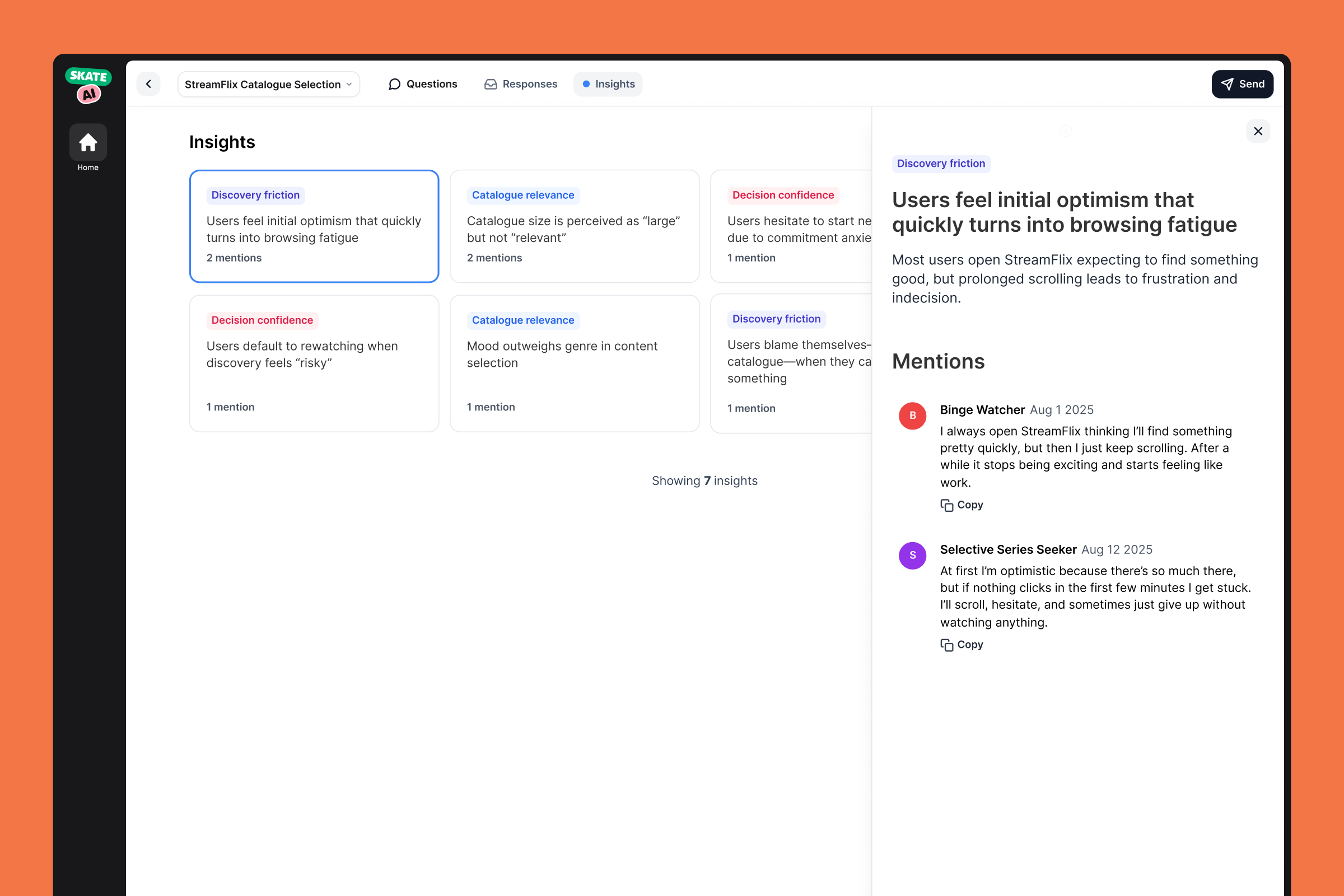
Once interviews are complete, Skate AI analyses the responses and surfaces insights grouped by theme, each one linked back to the specific participant quotes that support it. A researcher can open any insight and read the verbatims directly.
The insights are shareable and designed to go straight to the product team.
Feedback
AI-conducted interviews aren't a replacement for human ones, but they can support a project by gathering signals from a wider group of people quickly.
The feedback on AI-conducted interviews was about human nuance, the kind a skilled researcher reads and acts on in the moment. When a participant shifts from remembering to rationalising, a good interviewer redirects. When an answer is too short, or too polished, or hedged in a way that suggests something left unsaid, they probe. An AI accepts a coherent response and moves on.
Key takeaways
The people who came to Skate AI were entrepreneurs curious about AI, not researchers with a problem to solve. For that group, an AI-conducted interview was interesting as a concept but couldn't replace what they actually valued: talking to people. Analysis was what they actually needed help with: cleaning transcripts, synthesising themes, extracting something actionable.